In the heart of Port Blair stands a structure that is not just made of bricks and iron, but of sacrifice, courage, and unbreakable spirit. Cellular Jail, popularly known as Kala Pani, is one of the most important historical landmarks of India. Every Indian who visits this place feels a deep sense of pride and emotion.
When you walk through its massive gates, something changes inside you. The sea breeze feels different. The silence feels heavier. It is not just a tourist attraction – it is a reminder of what our freedom cost.
History of Cellular Jail
The British constructed Cellular Jail between 1896 and 1906 to imprison political prisoners who were fighting against colonial rule. The idea was to isolate revolutionaries from the mainland and break their spirit through loneliness and hard labour.
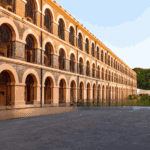
The prison was built in a unique design with seven wings radiating from a central watchtower, inspired by the panopticon system. It originally had 698 solitary cells, each measuring approximately 13.5 feet by 7 feet.
Each prisoner was kept alone. There were no dormitories. No communication with other inmates. Even the ventilators were placed high so that prisoners could not see outside or talk to one another. The intention was clear – total isolation.
The British believed distance from the mainland and strict punishment would silence the freedom movement. But instead, it strengthened the determination of those imprisoned here.
Why Is It Called “Kala Pani”?
“Kala Pani” literally means “Black Water.” During British rule, crossing the sea was considered social exile. Prisoners sent to the Andaman Islands were cut off from family, society, and homeland.
For many, transportation to Cellular Jail meant a life sentence in harsh conditions. It was considered one of the most severe punishments during that era.
Brave Freedom Fighters Imprisoned Here
Several prominent revolutionaries were imprisoned in Cellular Jail, including:
- Vinayak Damodar Savarkar
- Batukeshwar Dutt
- Barindra Kumar Ghosh
These were not criminals. They were educated, passionate individuals who dreamed of a free India. Despite severe torture and isolation, they never gave up their belief in independence.
When you stand inside their tiny cells, you automatically imagine their strength. No contact with family. No certainty of release. Yet, they chose sacrifice over comfort.
Harsh Punishments and Hard Labour
Life inside Cellular Jail was extremely difficult. Prisoners were forced to:
- Operate heavy oil mills (Kolhu) for long hours
- Pound coir to make ropes
- Perform exhausting manual labour
If they refused, they were subjected to punishments such as crossbar fetters and solitary confinement for extended periods.
In 1933, many prisoners went on a hunger strike protesting against inhuman treatment. During this protest, revolutionary Mahavir Singh died due to force-feeding. This incident shook the nation and exposed the brutality of the British administration.
Why Only Three Wings Remain Today
Originally, Cellular Jail had seven wings. However, after India’s independence, some wings were demolished. Part of the land was later used for medical facilities including GB Pant Hospital.
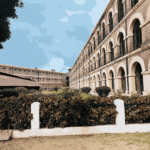
Today, only three wings remain, preserved as a historic monument. Even these three wings are powerful enough to tell the story of sacrifice.
Declared a National Memorial
In 1979, the Government of India officially declared Cellular Jail a National Memorial. This recognition honours the bravery and sacrifices of the freedom fighters imprisoned here.
Today, it stands as a symbol of patriotism and resilience for the entire country.
Museum and Galleries Inside the Jail
The Cellular Jail complex now includes:
- Freedom fighter galleries
- Rare photographs and historical documents
- Personal letters and belongings
- Models showing the original seven-wing structure
Visitors can walk through the corridors, enter solitary cells, and understand the prison’s architecture closely. The preserved oil mill is also displayed, reminding visitors of the physical hardship endured by inmates.
Light and Sound Show – An Emotional Experience
One of the most moving experiences at Cellular Jail is the evening Light and Sound Show. The story of India’s freedom struggle is narrated with dramatic lighting effects against the backdrop of the jail walls.
As the voice echoes in the open courtyard and lights illuminate the historic structure, many visitors feel goosebumps. Some even become emotional. It is not just a show – it is history speaking to you.
If you visit Port Blair, attending this show is highly recommended.
Timings and Entry Information
- Open: 9:00 AM to 5:00 PM
- Closed: Mondays (subject to change; always reconfirm before visit)
- Entry Fee: Approx ₹30–₹50 for Indian nationals
- Light & Sound Show: Separate ticket required
Photography is generally allowed in open areas, but restrictions may apply inside certain galleries.
Nearby Attractions in Port Blair
After visiting Cellular Jail, you can also explore nearby places such as:
- Corbyn’s Cove Beach
- Rajiv Gandhi Water Sports Complex
- Aberdeen Bazaar for local shopping
These attractions are located within short driving distance.
Why Every Indian Must Visit Cellular Jail
Beaches in Andaman give happiness. But Cellular Jail gives perspective.
It teaches us that freedom was not gifted — it was earned through pain and sacrifice. Visiting this place makes you value independence more deeply.
When you step out of the jail and look at the open sky above Port Blair, you feel grateful. You feel proud. And somewhere inside, you silently thank those who made it possible.
Frequently Asked Questions (FAQ)
Cellular Jail is famous for being a colonial prison where Indian freedom fighters were imprisoned and tortured during British rule. It is now a National Memorial.
It is called Cellular Jail because it was built with individual solitary cells (cellular structure) to isolate prisoners completely.
Originally, there were 698 solitary cells across seven wings.
Only three wings remain today; the others were demolished after independence.
Yes, it is highly recommended. The show beautifully narrates the history of the freedom struggle connected with Cellular Jail.
You should keep at least 2–3 hours for proper exploration, including the museum and Light & Sound Show.
Photography is generally allowed in open areas but may be restricted inside certain sections.